Iran Threatens 18 U.S. Tech Giants As potentail attack targets Companies
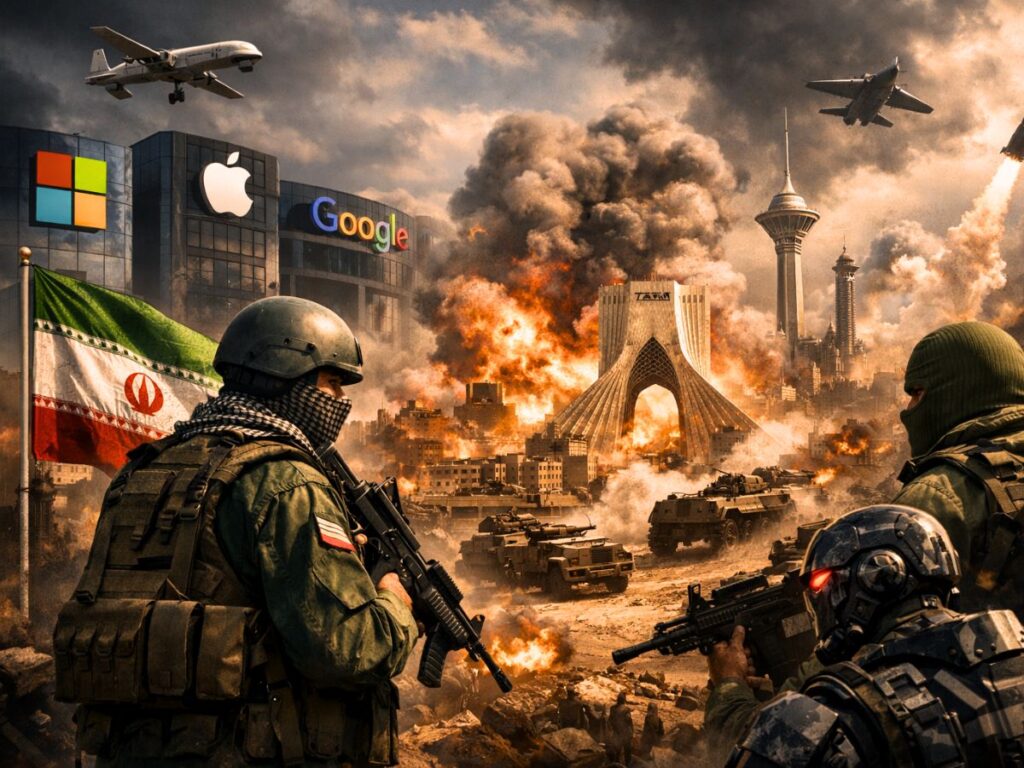
Iran’s Islamic Revolutionary Guard Corps (IRGC) has reportedly named 18 major U.S. companies as potential targets amid rising geopolitical tensions. These include Apple, Google, Microsoft, IBM, Tesla, and Boeing—some of the world’s most powerful technology and defense companies.
While these threats have not yet resulted in confirmed attacks, they highlight serious risks for global businesses, including cybersecurity threats, supply chain disruptions, and economic instability.
Table of Contents
Physical Threats to Offices and Facilities
Physical threats may directly target corporate offices, research centers, and manufacturing facilities—especially in the Middle East, where tensions are higher.
Such risks could involve bombings, sabotage, or localized attacks aimed at causing maximum disruption to operations.
Companies with high-profile offices, global presence, and regional operations are particularly vulnerable to security risks in these scenarios.
Example: Tesla or Apple regional offices could face evacuation orders or heightened security measures.
2. Cybersecurity Threats
Considering the current climate, companies must prepare for the potential fallout from Iran’s threats against 18 U.S. tech giants.
Cybersecurity threats are the most likely and immediate risk vector, especially targeting critical digital infrastructure, such as:
- Cloud servers and data centers
- Internal communication networks
- Customer-facing platforms and applications
Potential cyberattacks may include ransomware attacks, data breaches, service outages, and destruction of digital assets—all of which can severely disrupt operations.
As organizations assess their vulnerabilities, it’s crucial to understand why Iran threatens 18 U.S. tech giants and how these threats may impact their bottom lines.
Past geopolitical conflicts have shown that such cyber threats can cause immediate operational damage and significant financial losses for multinational companies.
The reality of geopolitical tensions means that when Iran threatens 18 U.S. tech giants, organizations must respond promptly to safeguard their interests.
3. Supply Chain Disruption
As this situation unfolds, it’s evident that Iran threatens 18 U.S. tech giants, which could lead to significant disruptions in various sectors.
Supply chain disruption is a major risk, as threats can extend beyond companies to logistics partners, hardware suppliers, and regional vendors.
Moreover, understanding the context behind why Iran threatens 18 U.S. tech giants can provide insights into potential future actions.
Shipping delays, restricted routes, or targeted disruptions could halt production and delay delivery of critical products and services.
Global tech leaders like Microsoft, Dell, and IBM may face delays in hardware deployment, server installations, and infrastructure expansion, particularly in the Middle East region.
Such disruptions can lead to operational slowdowns, increased costs, and reduced market availability of key technologies.
4. Employee Safety and Travel Restrictions
Furthermore, the ramifications of Iran threatening 18 U.S. tech giants could resonate across global markets, affecting investor sentiment.
Employee safety and travel restrictions become a critical concern during rising geopolitical tensions. Employees in affected regions may face evacuations, limited mobility, and enforced remote work policies, disrupting normal operations.
These threats can also lead to psychological stress and uncertainty, negatively impacting productivity and employee retention. To mitigate risks, companies may need to restructure teams, relocate offices, or temporarily shift operations to safer regions, ensuring both workforce safety and business continuity.
5. Market and Investor Impact
Market and investor impact is one of the most immediate consequences of threats to major U.S. tech companies. Even the possibility of attacks can trigger stock market volatility, particularly in the short term.
Ultimately, the threats posed by Iran against 18 U.S. tech giants could necessitate a reevaluation of security protocols and contingency planning.
Investor confidence may decline if companies face risks of physical attacks or cyber threats, regardless of whether incidents actually occur.
Additionally, intense media coverage and public attention can weaken consumer trust, leading to reduced regional sales and brand perception.
Overall, uncertainty driven by geopolitical threats can create a ripple effect across financial markets, investment decisions, and global tech valuations.
Companies need to be vigilant as Iran threatens 18 U.S. tech giants, and they must implement robust defense mechanisms.
6. Emergency Preparedness and Risk Mitigation
Emergency preparedness and risk mitigation are essential for companies operating in high-risk environments shaped by geopolitical tensions. Organizations should adopt multi-layered crisis management strategies, including enhanced physical security at offices and facilities, advanced cybersecurity monitoring with rapid incident response teams, and clear employee safety protocols with emergency communication systems.
Additionally, securing insurance coverage for political and terrorism-related risks adds another layer of protection. Through proactive planning and risk management, companies can significantly minimize damage, reduce operational downtime, and ensure business continuity in the face of potential threats.
7. Why This Matters Globally
Global impact of geopolitical tensions is becoming increasingly evident as conflicts now directly target multinational corporations, not just traditional military assets. These threats expose vulnerabilities in global supply chains, digital infrastructure, and consumer access to technology, making them highly sensitive to political escalation.
As a result, major tech companies may need to reassess their presence in high-risk regions like the Middle East, strengthen strategic partnerships, and invest in more resilient and secure operations to ensure long-term stability.
Overall, as we analyze the global landscape, it becomes clear that Iran threatens 18 U.S. tech giants, urging businesses to prioritize security and resilience.
FAQs
Which U.S. tech companies were listed as potential targets?
The reported list includes major firms such as Apple, Google, Microsoft, IBM, Tesla, Boeing, Meta, Intel, Oracle, HP, Dell, Cisco, and Amazon. These companies operate in the Middle East and could face exposure in offices, infrastructure, or personnel.
Are these attacks confirmed or ongoing?
No confirmed attacks have occurred. The IRGC’s statement is currently a reported threat, not an action. Companies are monitoring the situation and taking precautionary measures.
What types of attacks could companies face?
Potential attacks include cyberattacks on servers and networks, physical threats to offices or facilities, supply chain disruption, and employee safety risks. Cyberattacks are considered the most likely scenario.
How should companies respond to such threats?
Businesses should implement comprehensive security protocols, including:
- Enhanced physical and cybersecurity measures
- Employee safety guidelines and evacuation plans
- Crisis communication strategies
- Continuous monitoring of geopolitical developments
Conclusion
Iran’s reported warning against 18 U.S. tech giants underscores the growing intersection of geopolitics and global business. While no attacks have been confirmed, the threats highlight multiple areas of risk—including physical security, cyberattacks, supply chain disruptions, and employee safety.
For multinational firms, preparedness and proactive crisis management are essential to minimize operational impact and protect both corporate assets and personnel. The situation also serves as a reminder that global businesses are increasingly vulnerable to political tensions, and effective risk mitigation strategies must now integrate geopolitical factors alongside traditional corporate planning.